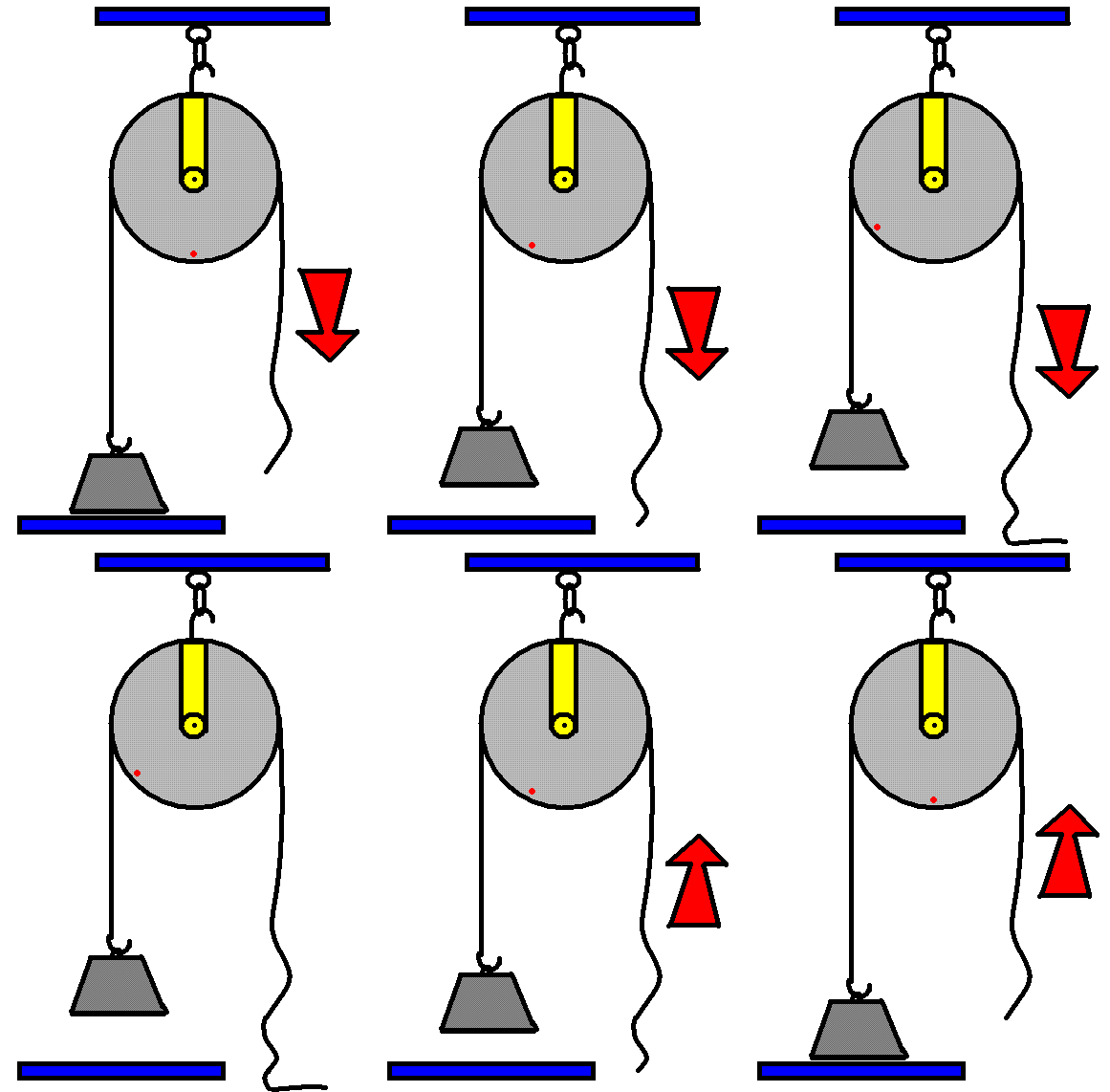
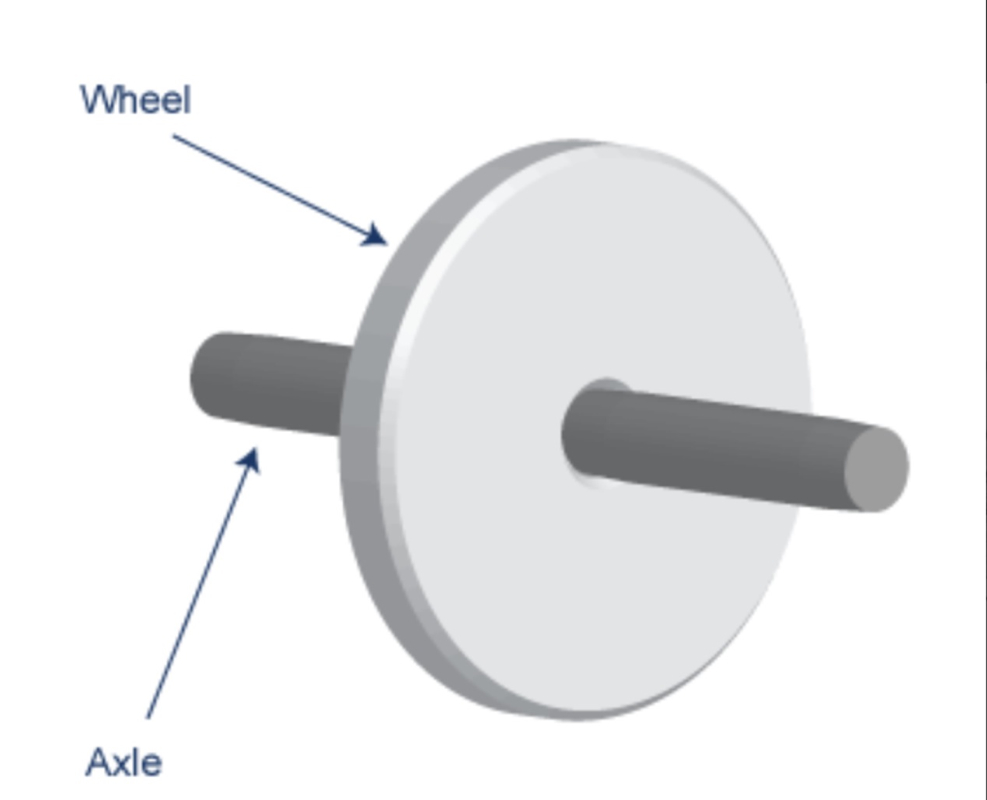
So today, we are going to talk about one of the most important and basic simple machine, the pulley, but first we need to know exactly what is a pulley, so a pulley is a wheel on an axle or shaft that is designed to support movement and change of direction of a taut cable or belt along its circumference. But also is important to know some historic data from the pulley.
The history of the pulley:

The use of the pulley is due to plutarco who in his work "parallel lives", tells that arquimedes said to the king Heiron from Syracuse that if we apply an specific force, we can move every object that we want. Hieron ask Arquimedes to proof his theory, so Hieron propose to move a navy ship. Plutarco tells in his book that Arquimedes take out the ship of the water with a rope. This is the unique historical note that tell the origins of the pulley.

So this is all for today, but probably I will have to update this post, but, for the momment thanks for reading and see you the next time.
UPDATE:
We have two tipes of pulley one is the fixed pulley and the other is the movable pulley.
Fixed pulley:
As the name say, this kind of pulley have to be fixed on a specific position and we only can rotate in the own axis of the machine, we can se an example of this kind of pulley in this image:

The load (Resistance) is equal to the effort (Power). In the practice we use pulley that have mechanical advantage of one, that is to say, that allow lift heaviest load with same effort of a light weight.
P.p = R.r
As p = r, then P = R
Mean the force is equal to weight lifting
Movable Pulley:
The movable pulley is nothing that a pulley attached to a rope having one end anchored to a fixed point and the other (movable end) connected to a drive mechanism.
Instead of relying on the shaft as fixed, it is in the rope. To balance a resistance R, the force F is applied (F is used in place of P); now we study what the relationship is between the two forces.
In the image we can see that, if we have a weight of 10kg, but to balance this we have to apply 5kg of power in both hands.F = R / 2, for this case, the condition for a movable pulley is in equilibrium is that the driving force is half the resistance.
M (F) + M (R) = 0
P. p = R. r
M (F) = F. 2 r (r, radius of the pulley)
M (R) = - R. r
F. 2r R.r = 0 ==> F = R / 2
So with this I can finally conclude this post, so see you next time.
Sources:
http://historiaybiografias.com/maquinas_simples/
http://concurso.cnice.mec.es/cnice2006/material107/mecanismos/mec_poleamovil.htm
Youtube channel Julioprofe